

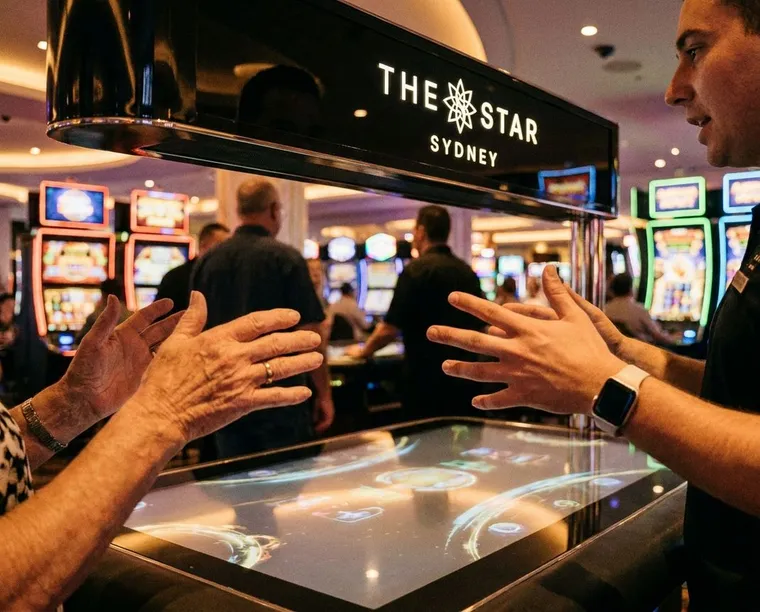
What the Experience Actually Looks Like
I spent a couple of weeks drifting around The Star Sydney’s gaming floor in Pyrmont, and the size of it really sneaks up on you. It is Australia’s second biggest casino, sitting just behind Crown Melbourne, and the live dealer operation looks like it. Different zones, rows of tables, properly trained dealers, and a floor that still hums late into the night on Fridays and Saturdays.
The Blackjack spread on its own gives you genuine choice. I saw standard Blackjack, Blackjack Challenge, Pontoon, and the Vegas Star Blackjack setup, all running on their own tables with slightly different layouts and rule tweaks. If you flag a dealer before you start, they will usually run through the basics or point out what is different at that table, which helps a lot if you bounce between variants. Weekend nights do get jammed, though. If you want a particular game and a certain minimum, you sometimes stand behind a chair for a bit and wait your turn - that is just how a busy floor works.
Something that stood out to me early: the level of surveillance feels heavier than in a lot of other casinos. Cameras on most angles, supervisors doing constant walk-throughs, and visible monitoring stations parked close to the table clusters. That is not paranoia on my part, it is clearly linked to where The Star sits with the regulator right now, which I will come back to properly in the next section.
How the Floor Is Laid Out
The live dealer tables are grouped by game type, so after you have done one slow lap, getting around becomes pretty straightforward. This is roughly how the main floor broke down when I walked it:
| Game Type | Format | Notes |
|---|---|---|
| Blackjack | Standard and Challenge variants | Multiple tables with different minimums |
| Pontoon | Traditional Australian variant | Dedicated cluster of tables |
| Vegas Star Blackjack | Proprietary variant | Usually in premium-style areas |
| Electronic Table Games | Digital interface, live dealer hybrid | Close to the main floor entry |
| Electronic Gaming Machines | Standalone pokies | In their own section away from tables |
Table minimums move around with the time of day and which room you are actually in. The premium spaces sit higher on limits and have a more controlled entry process with staff at the door. I could not nail down firm dollar figures for every single table, because those limits are clearly being tweaked for demand and under the current operating directions the NICC-appointed manager is giving the venue.
Getting yourself onto a live dealer table is pretty simple in practice. You come in through the main Pyrmont entrance with valid photo ID, step through a quick gaming floor check where staff confirm your age, then you angle off towards the game section you want. The signs are obvious and the floor staff will usually point you where you need to go if you look even a bit lost. When you reach a table with an empty seat, you wait until the current hand finishes before sliding in. You can swap cash for chips on the spot with the dealer, or head to the cashier cage first if you are putting more serious money into play. I always double-check the table minimum with the dealer before putting my first bet down, and it avoids awkward backtracking.
When you are done, you can colour up at the table if the dealer is allowed to handle that level of cash-out, or walk your chips to the cashier cage and cash out there.
The Regulatory Situation - and Why It Matters
This bit needs to be spelled out because it changes the feel of the whole operation. The Star Sydney’s casino licence is formally suspended at the moment. The NSW Independent Casino Commission pulled the licence indefinitely back in October 2022 after the first Bell Review decided The Star was unsuitable to hold or run a casino licence in New South Wales. A follow-up inquiry in 2024 - the Bell 2 Report - landed on exactly the same conclusion again.
Despite that, the casino floor is still trading. The venue now runs under an independent manager, Nicholas Weeks, appointed by the NICC to oversee everything on the regulator’s behalf. The NICC basically chose a supervised repair job instead of shutting the doors, so people can still walk in and play at live dealer tables. The catch is that the company running the day-to-day is not holding a normal, unsuspended licence like you would expect from a big-name casino.
The regulatory findings were not trivial paperwork issues. Both Bell inquiries set out major failures around anti-money laundering and counter-terrorism financing controls, links into organised crime networks, governance breakdowns sitting right up at board level, and breaches of responsible gambling rules - including ignoring mandated three-hour gaming session caps. In 2026, the NICC added another A$10 million fine on top for systemic failures around historic financial crime risks, and forced an enforceable undertaking that another A$5 million would be carved off for technology to handle financial crime risks.
If you are literally sitting at a live dealer table, all of that plays out in some very direct ways:
- Identity checks feel tighter than at plenty of other venues. Staff are working under stricter compliance settings and they follow them.
- Bigger cash transactions are watched closely and can mean extra questions or paperwork before anything is accepted.
- Getting into VIP or premium rooms is not as casual as it used to be. There is more formal vetting built into those doors now.
- Session monitoring is not just a line in a policy. Floor staff are required to keep an eye out and act if responsible gambling triggers are hit.
- Loyalty programs and promos might look slimmer or structured a bit differently, because everything is running through a manager who answers straight to the NICC.